7 Motivational Books That Actually Changed My Perspective (Not Just My Mood)

Most motivational books give you a dopamine spike and then collect dust.
These seven are different. Each one left a permanent mark on how I think, not for a week, but for years. I’ll tell you what shifted, what didn’t, and exactly who should read each one.
Why Some Books Change You, and Others Don’t
Not every “life-changing” book actually changes your life.
The ones that do share something in common: they don’t just give you information, they challenge an assumption you didn’t know you were holding. One sentence lands differently, and suddenly you’re seeing a situation you’ve been in for years with completely new eyes.
That’s the difference between a book that motivates you and one that transforms you.
The seven books below did the second thing for me.
How to Read These Books So They Actually Stick
Before the list, a short note on approach, because reading method matters as much as book choice.
Read with a specific problem in mind. A book about habits hits differently when you’re actually trying to build one. Vague curiosity produces vague results.
Write one sentence after each chapter. Not a summary, a response. What is this challenge in your life right now?
Apply one idea before moving to the next book. Most people read ten books and apply nothing. Read fewer. Do more.
Revisit the same book later. A book you read at 22 will read like a completely different book at 32.
Same words, different person, new layers.
7 Motivational Books That Changed My Perspective
Most motivational books feel good for a week.
You highlight a few lines, feel something shift, and then life resumes exactly as it was. The book goes on the shelf. The feeling fades.
These seven didn’t do that.
Each one hit at the right moment and rewired something I didn’t know needed rewiring, the way I handle failure, how I talk to people, and what I think “progress” actually looks like.
Some changed my daily habits. Others changed how I see suffering, success, and time itself.
I’m not recommending these because they’re popular. I’m recommending them because I think differently now than I did before I read them.
1. Man’s Search for Meaning Viktor E. Frankl
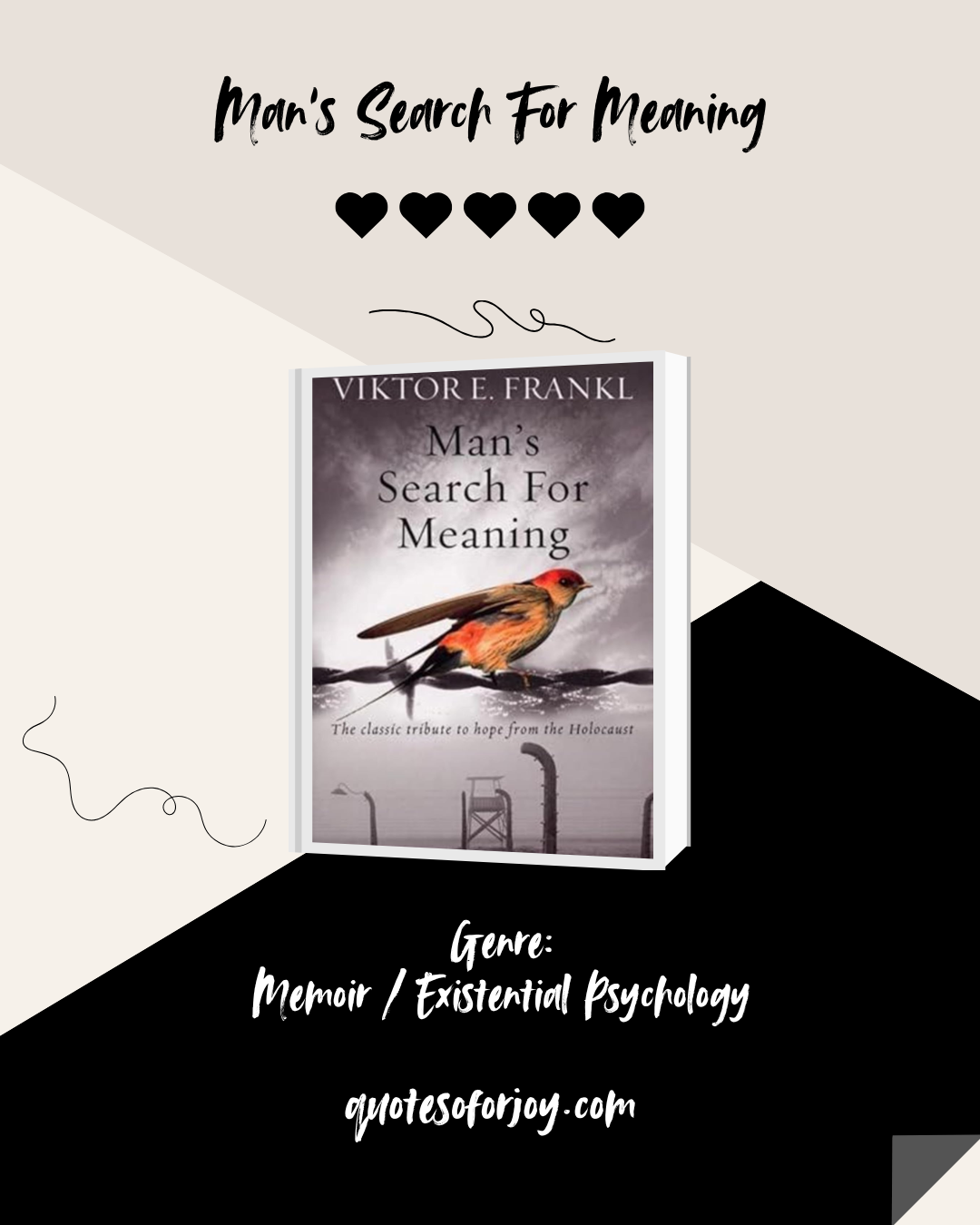
What it’s actually about: Frankl was a psychiatrist and Holocaust survivor. This book is part memoir, part psychological framework. He documents his time in Nazi concentration camps and draws from it a theory of human motivation: that the deepest drive we have is not pleasure or power, but meaning.
The shift it gave me: I used to think suffering was something to escape. Frankl reframes it entirely, suffering that has purpose becomes bearable. More than bearable, it becomes a source of identity and strength. This changed how I interpret hard periods. Instead of asking “why is this happening to me,” I started asking “what is this preparing me for?”
The line that stayed with me: The idea that everything can be taken from a person except the freedom to choose their attitude in any given set of circumstances. That’s not a motivational quote it’s a philosophical anchor.
Who should read this: Anyone feeling trapped, purposeless, or overwhelmed. Also, anyone who thinks their circumstances define their options. This book dismantles that belief completely.
Best time to read it: During a low point. Not because it’s comforting, but because it gives meaning to the low point itself.

2. The 7 Habits of Highly Effective People, Stephen R. Covey
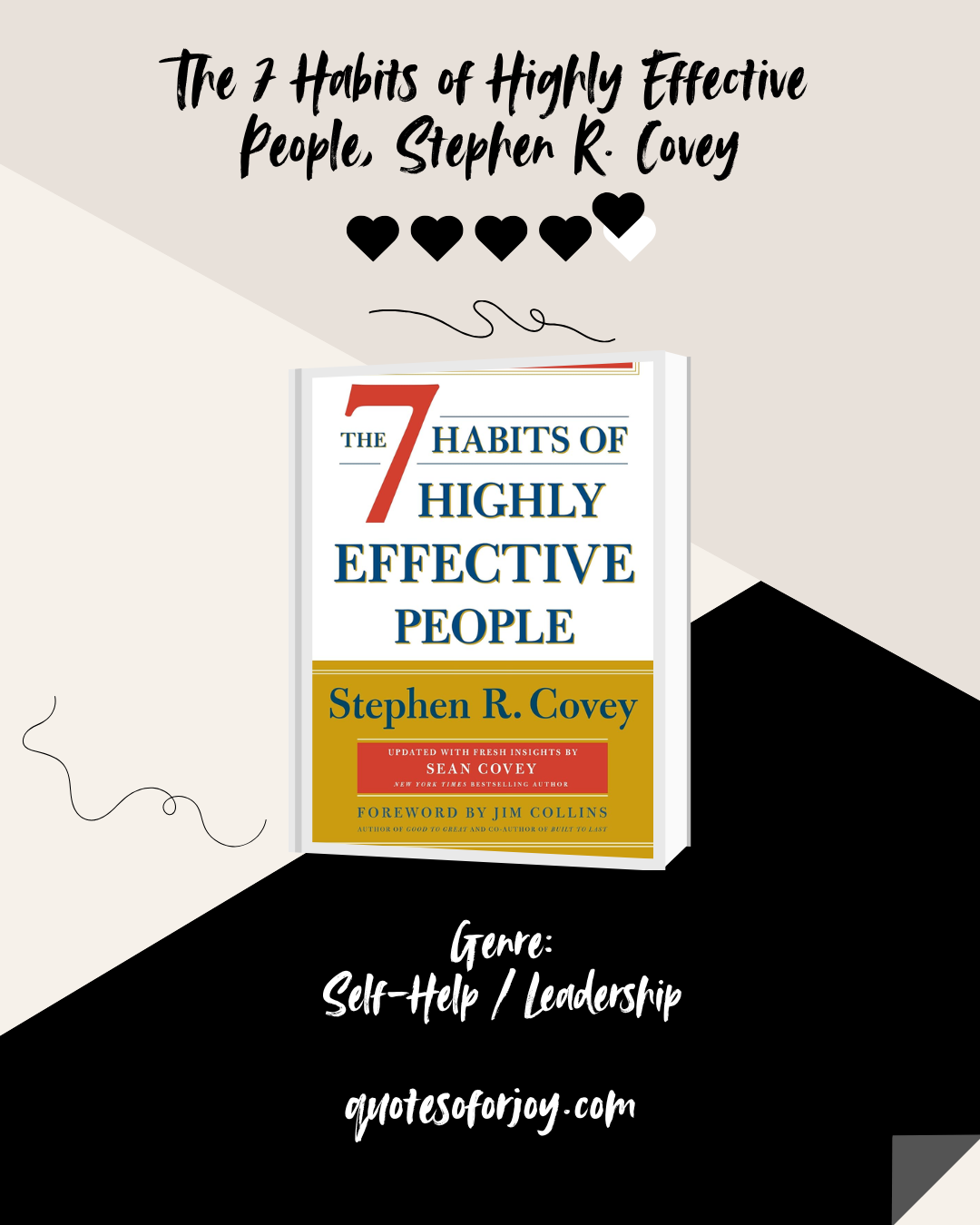
What it’s actually about: Covey argues that effectiveness is character-based, not technique-based. The seven habits move from personal responsibility (private victories) to interpersonal skill (public victories) to continuous renewal. It’s structured, systematic, and deliberately slow-burning.
The shift it gave me: Habit 3 “Put First Things First” reorganised how I structure every single day. Covey distinguishes between urgent tasks and important tasks. Most people live in urgency. Important work, the kind that actually moves your life forward, rarely feels urgent, so it never gets done. This framework made that visible to me, and I haven’t stopped using it.
The line that stayed with me: The idea that you can’t manage time only yourself. Time management is self-management.
Who should read this: Anyone in a transitional phase: new job, new city, starting a business, building habits after a reset. It gives structure when structure is missing.
Who might not connect: If you’re looking for quick inspiration, this book will frustrate you. It’s a long-term investment, not a motivation hit.
3. Atomic Habits James Clear
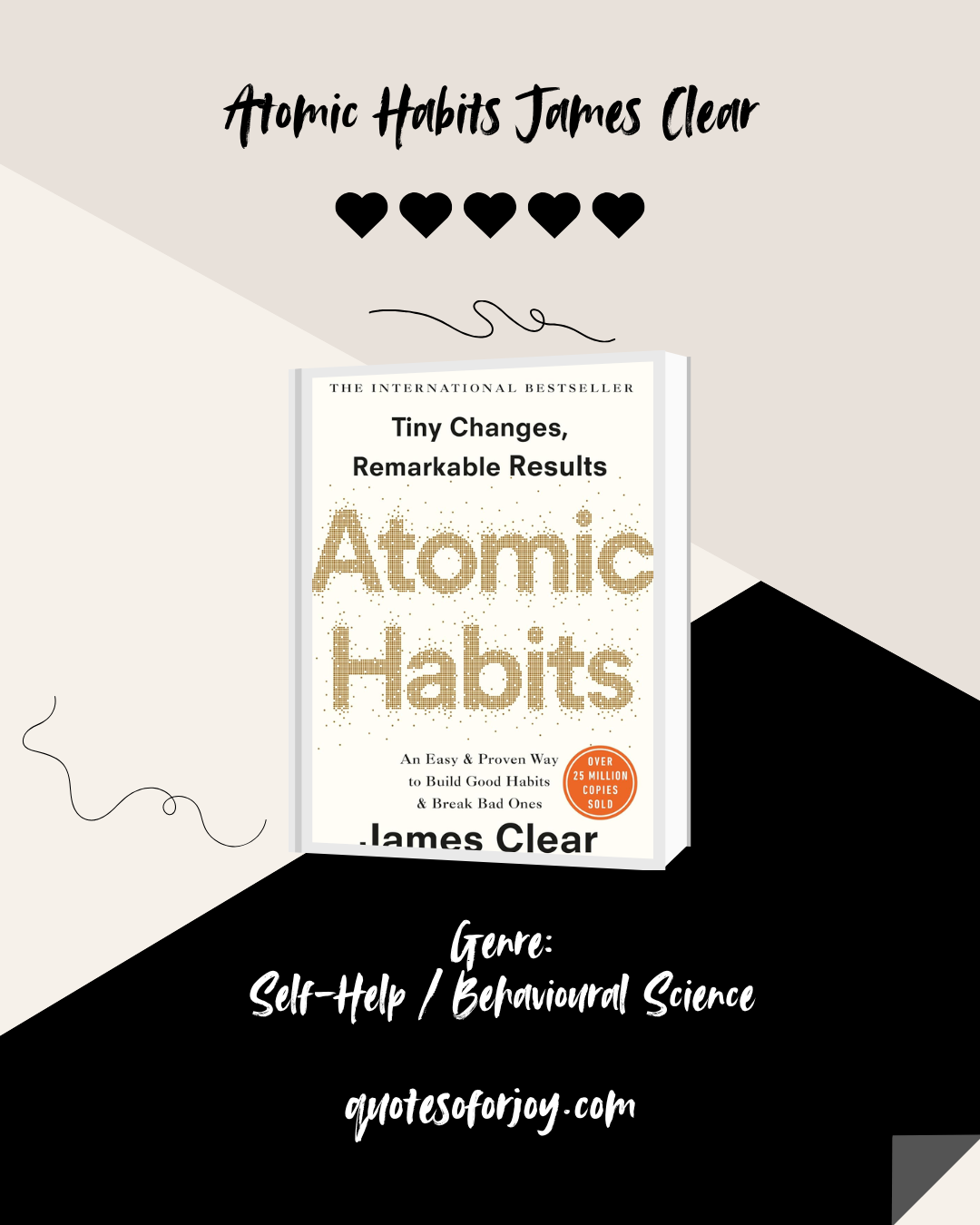
What it’s actually about: Clear makes a single argument with exhaustive evidence: small improvements, compounded consistently, produce dramatic results.
The book covers how habits form, why identity drives behaviour more than goals do, and how to design your environment to make good habits inevitable and bad habits inconvenient.
The shift it gave me: The 1% concept changed how I measure progress. I stopped asking “am I where I want to be?” and started asking “am I slightly better than yesterday?” That shift removed almost all the pressure that was making me quit before I could build momentum.
The deeper idea: Clear argues that the problem with motivation is that it treats behaviour as the outcome. It isn’t. Behaviour is the byproduct of identity. You don’t rise to the level of your goals you fall to the level of your systems.
Who should read this: Anyone who has tried to build habits and failed repeatedly. Anyone who feels like they lack willpower. Anyone who overthinks and under-executes. This book makes the path concrete and simple.
Start here if: You want a practical, immediately applicable read with zero philosophical overhead.
4. How to Win Friends and Influence People, Dale Carnegie
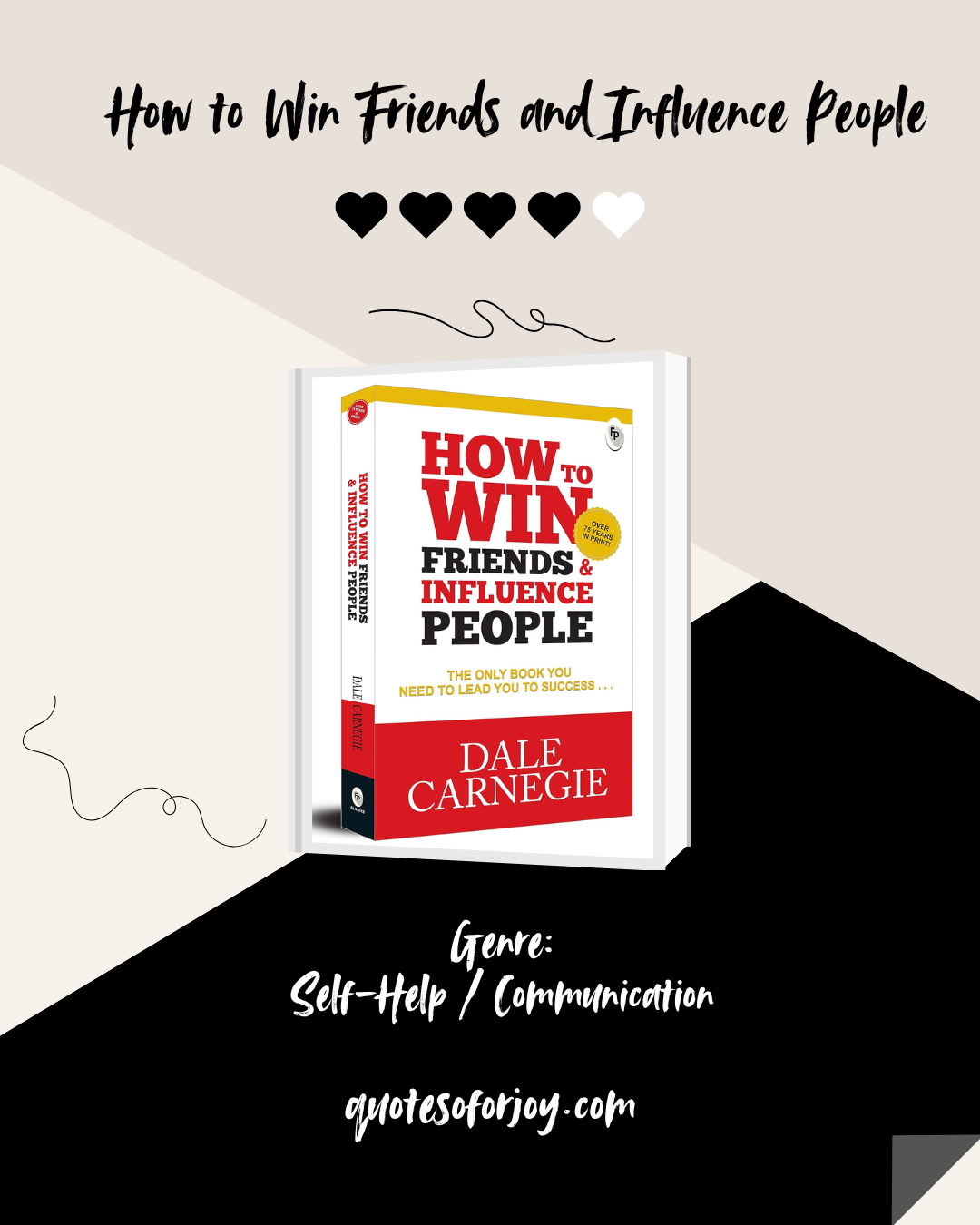
What it’s actually about: Published in 1936 and still selling. Carnegie teaches the fundamentals of human connection: how to make people feel valued, how to communicate without triggering defensiveness, and how to lead and persuade without authority. It’s not manipulation, it’s empathy, made practical.
The shift it gave me: I used to think being right in an argument was winning. Carnegie showed me that being right and making someone feel wrong achieves nothing. What actually moves people is feeling heard and respected. That reframe completely changed how I handle disagreements, personal and professional.
What still works in 2026: The social media era has made shallow connections easy and deep connections rare. Carnegie’s principles, such as genuine interest in others, remembering names, and making the other person feel important, are more valuable now precisely because they’re rarer.
Who should read this: Anyone who struggles with conflict, negotiation, or building professional relationships. Also, anyone who feels like they’re being overlooked despite being competent.
5. The Power of Now Eckhart Tolle
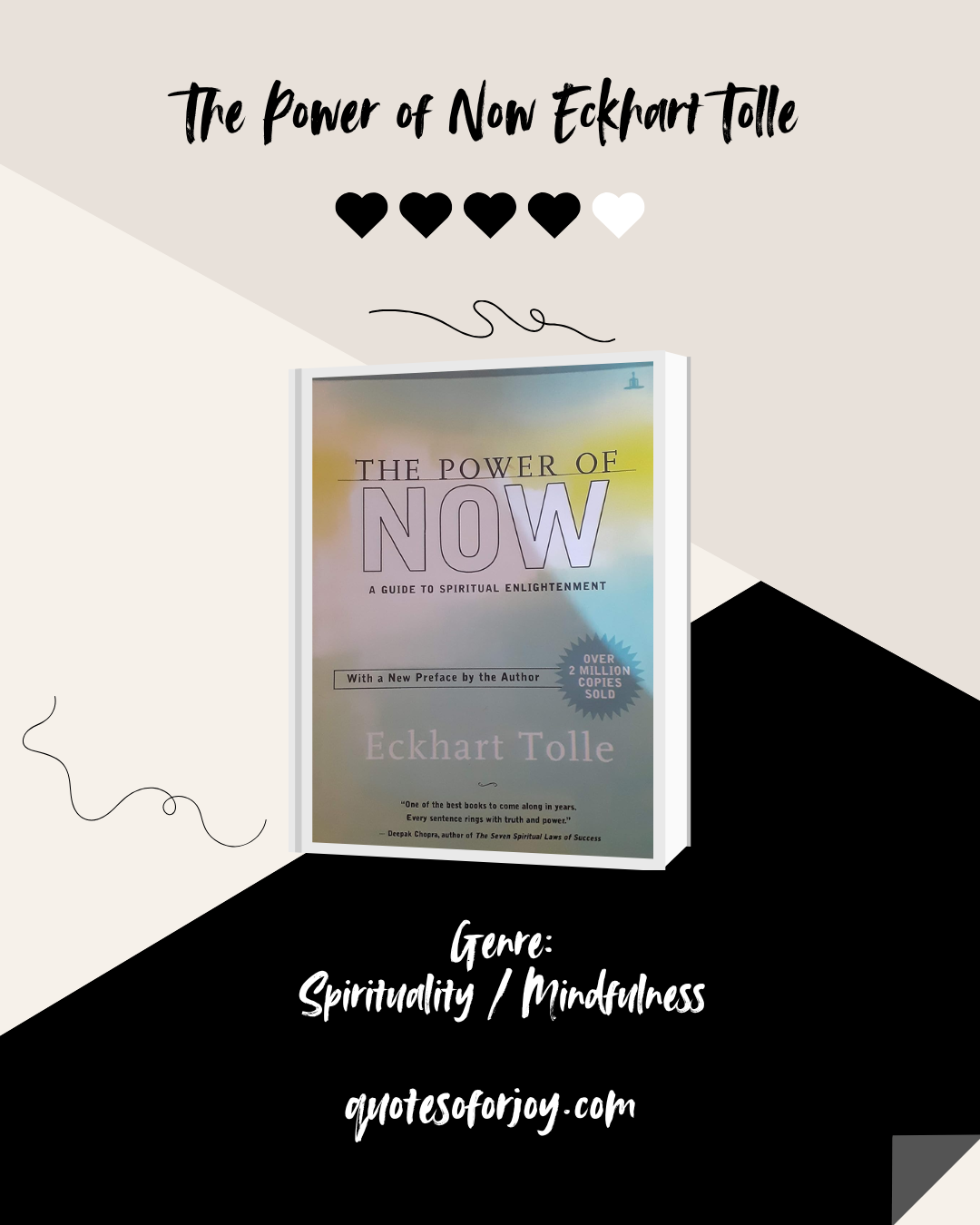
What it’s actually about: Tolle’s core argument is that almost all human suffering is caused by excessive identification with the thinking mind, specifically, with thoughts about the past (regret, nostalgia) and the future (anxiety, planning).
The present moment is the only place where life actually exists, and most people are rarely in it.
The shift it gave me: I’m someone who defaults to anxious future-thinking. This book didn’t fix that, but it gave me a way to notice it happening in real time. That gap between stimulus and response, even a fraction of a second, is where you get your power back. I learned to create that gap deliberately.
Practical outcome: I stopped reacting to stressful situations immediately. Pause, breathe, return to now. It sounds simple because it is. Doing it consistently is the hard part.
Who will connect: People dealing with anxiety, stress, or the feeling that their mind won’t quiet down. Those drawn to mindfulness or spiritual frameworks.
Who might not: Highly action-oriented readers may find the writing style too abstract. If philosophy frustrates you, start with Atomic Habits and return to this one later.
6. Mindset: The New Psychology of Success Carol S. Dweck
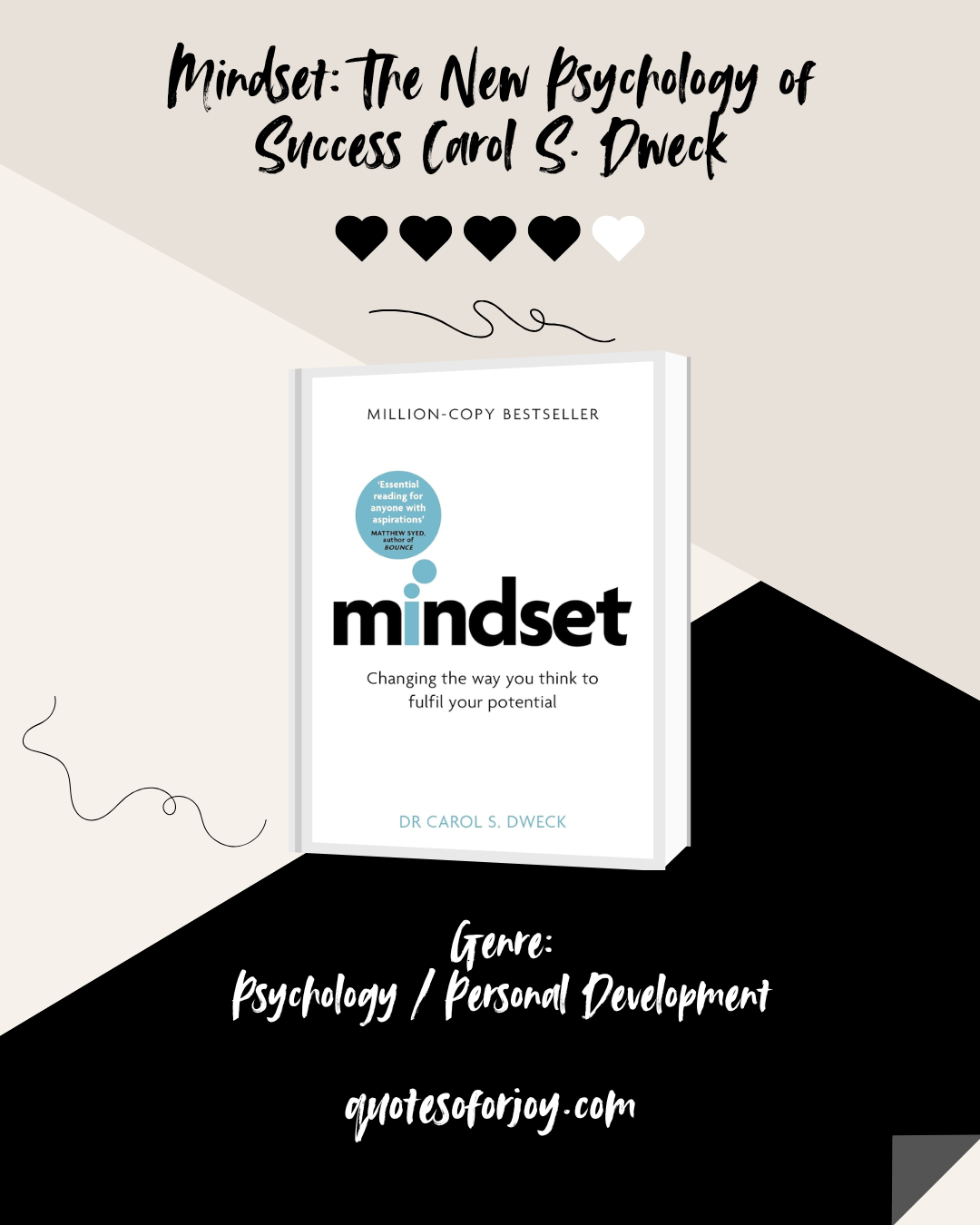
What it’s actually about: Dweck, a Stanford psychologist, presents decades of research showing that people operate from one of two core beliefs: a fixed mindset (intelligence and talent are innate and static) or a growth mindset (abilities develop through effort and learning). The mindset you hold determines how you respond to failure, criticism, and challenge.
The shift it gave me: I started catching myself in fixed mindset moments, the internal voice that says “I’m just not good at this” or “this is embarrassing, stop trying.” Naming it as a mindset rather than a fact creates distance from it. You can then choose differently.
The question this book taught me: Before quitting something difficult, I now ask: “Am I stopping because this genuinely isn’t right for me, or because it feels uncomfortable and I’m afraid of failing at it?” The answer is almost always the second one.
Who should read this: Parents, teachers, managers, and anyone who influences how others see their own potential.
Also, anyone who has ever given up on something they actually wanted because it got hard.
7. Think and Grow Rich Napoleon Hill
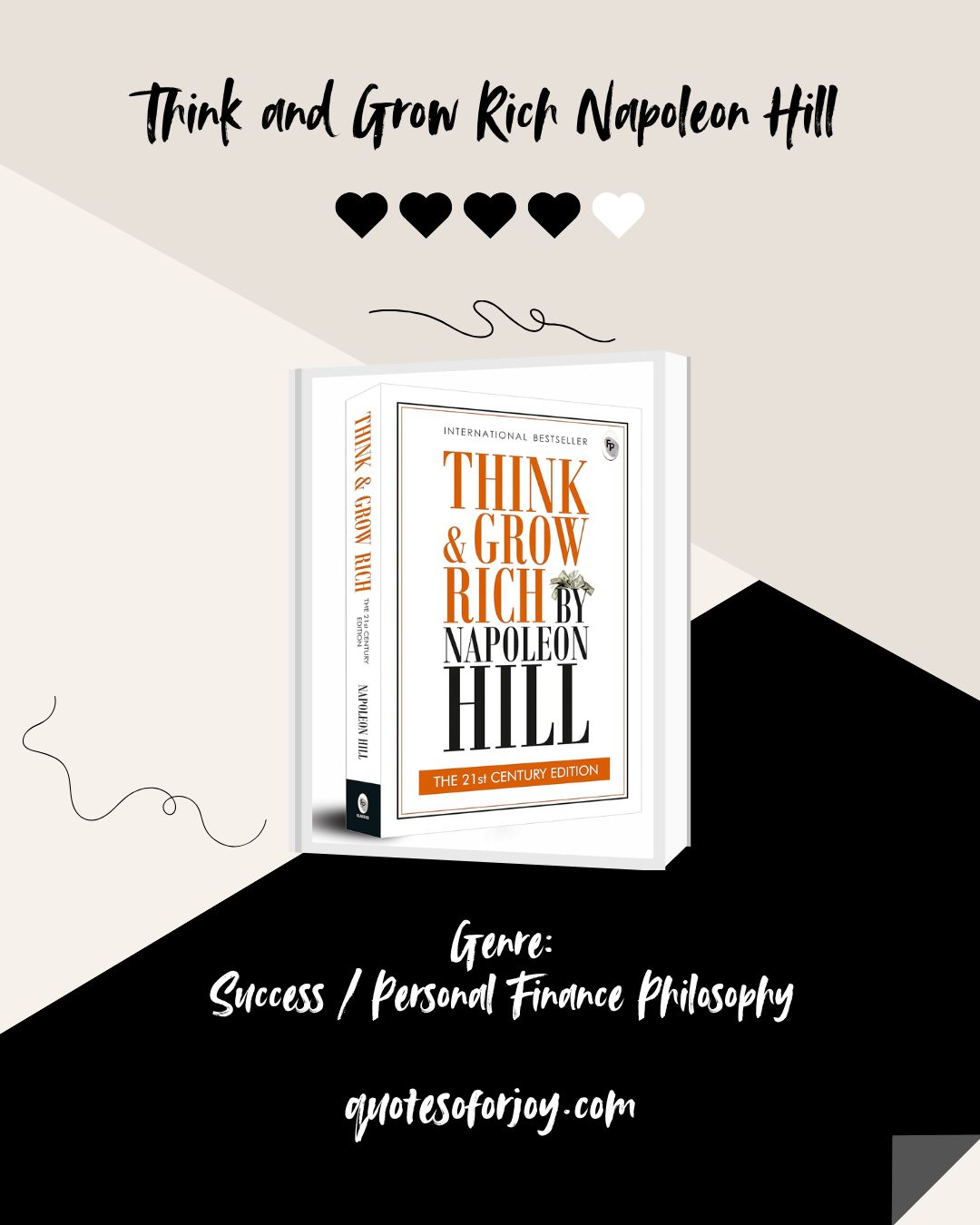
What it’s actually about: Hill interviewed hundreds of successful people over 20 years, and distilled 13 principles he believed were common to all of them. The core argument: success begins with a definite, burning desire backed by belief and a concrete plan. Without all three, effort alone is insufficient.
The shift it gave me: I used to believe that hard work was enough. Hill challenged that. He separates wishing from desiring. Wishing is passive, desire is obsessive and specific. He also separates belief from hope.
Belief drives action, hope waits. Aligning desire, belief, and action simultaneously is harder than it sounds, and most people are missing at least one.
The caveat: Some parts of this book are dated. Hill’s language around wealth occasionally slides into magical thinking. Treat it as a framework, not a formula. The psychological principles are sound; the mysticism is optional.
Who should read this first: Beginners looking for inspiration and a philosophical foundation for ambition.
Who gets more from it later: People with some experience who have worked hard without seeing results? Hill’s framework often reveals exactly which element is missing.
What All Seven Books Have in Common
Reading these books together, a few themes surface across all of them.
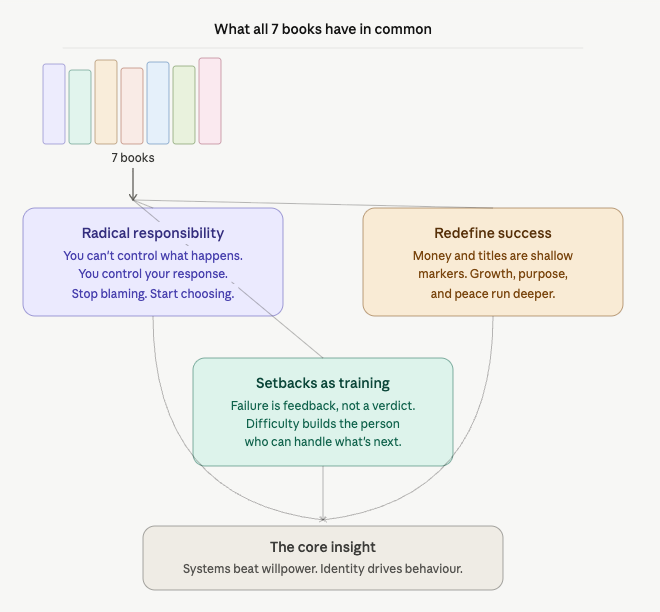
Radical personal responsibility. Every single one of these authors argues, in different ways, that your circumstances are not the determining factor in your outcome. Your response to your circumstances is. Frankl found meaning in a concentration camp. It is clear that anyone can build habits regardless of their starting point. Carnegie demonstrates that social skills are learned, not inherited.
Setbacks are information, not verdicts. Dweck makes this most explicit failure is feedback in a growth mindset, not evidence of fixed limits. But every author on this list treats difficulty as a feature of the growth process, not a sign you’re on the wrong path.
Systems beat motivation. Multiple authors, particularly Clear and Covey, argue that relying on motivation is unreliable. The people who consistently make progress build systems and environments that make their desired behaviour the path of least resistance. Motivation is the spark. Systems are the fuel.
How to Choose the Right Book for Your Situation Right Now
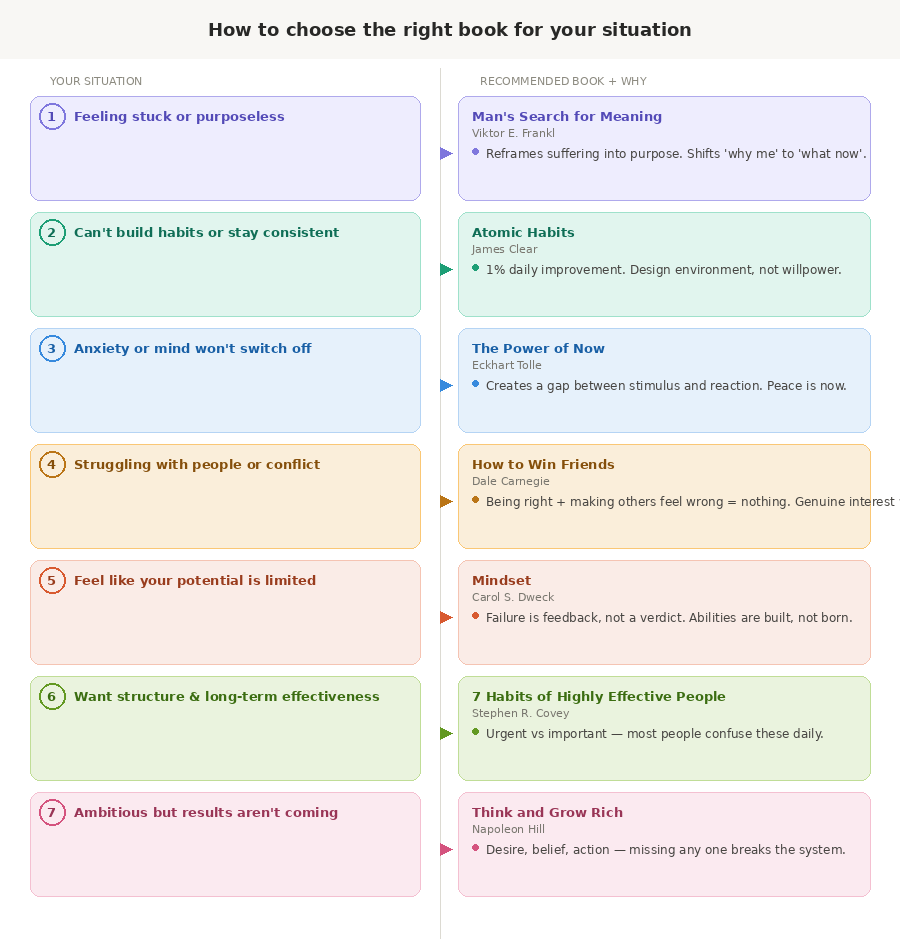
Feeling stuck or purposeless: Start with Man’s Search for Meaning. It reframes your current situation before you try to change it.
Struggling to build habits or consistency: Go straight to Atomic Habits. Most practical, lowest friction, fastest applicable results.
Anxiety, overthinking, can’t switch off: The Power of Now first. Then return to the action-oriented books once you have some internal quiet.
People problems, work, relationships, conflict: How to Win Friends and Influence People is still the most practically useful book on human connection ever written.
Feeling like your potential is limited: Mindset by Dweck. It directly targets that belief at its root.
Want structure and long-term effectiveness: The 7 Habits if you’re ready to commit. It’s not a quick read; it’s a multi-month project.
Ambitious but not yet successful: Think and Grow Rich for the framework. Pair it with Atomic Habits for the implementation.
Frequently Asked Questions
You’ve made it through seven books, seven shifts, seven different ways of seeing the world.
Now, the practical part, the questions I get most often about actually reading these books, retaining them, and knowing where to start.
Which book should I start with if I feel completely stuck?
Atomic Habits or Man’s Search for Meaning, depending on whether your stuckness is practical (you can’t seem to move) or existential (you don’t know which direction matters). Habits for action. Frankl for meaning.
Are audiobooks as effective as reading physical books?
For most of these books, yes, especially Carnegie and Atomic Habits, which are written conversationally. The Power of Now benefits from slow reading with pauses, so a physical copy is better there.
How do I actually retain and apply what I read?
One rule: before picking up the next book, apply one idea from the current one for at least two weeks. The application is where the learning happens. The book is just the instruction manual.
How many books should I read in a year?
Fewer than you think. Six books read deeply and applied outperform 52 books skimmed and forgotten. Depth beats volume here.
What if a book on this list doesn’t land for me?
Put it down. Come back in six months or a year. Timing matters. The Power of Now frustrated me the first time I tried it. Two years later, it was the most useful thing I’d read that year.
Final Thought
You don’t need to read all seven.
Pick the one that matches your current problem. Read it slowly. Apply one thing. Then decide whether to continue or move to the next.
One well-applied idea from one book will do more for you than seven books read passively.
Start there.
Read more
- 7 Best Business Books + Success Quotes That Built CEOs
- 10 Best Journals for Daily Reflection in 2026 (With Inspiring Quotes)
- 50 Life Quotes for Difficult Times to Help You Keep Going in 2026
- Motivational Quotes for Students + Study Success Guide 2026
- Monday Motivation Quotes to Start Your Week | 2026
- Positive Quotes for Mental Health & Self-Care: A Complete Guide